
Knee Pain When Running: Causes and How to Fix It
- 1 day ago
- 5 min read
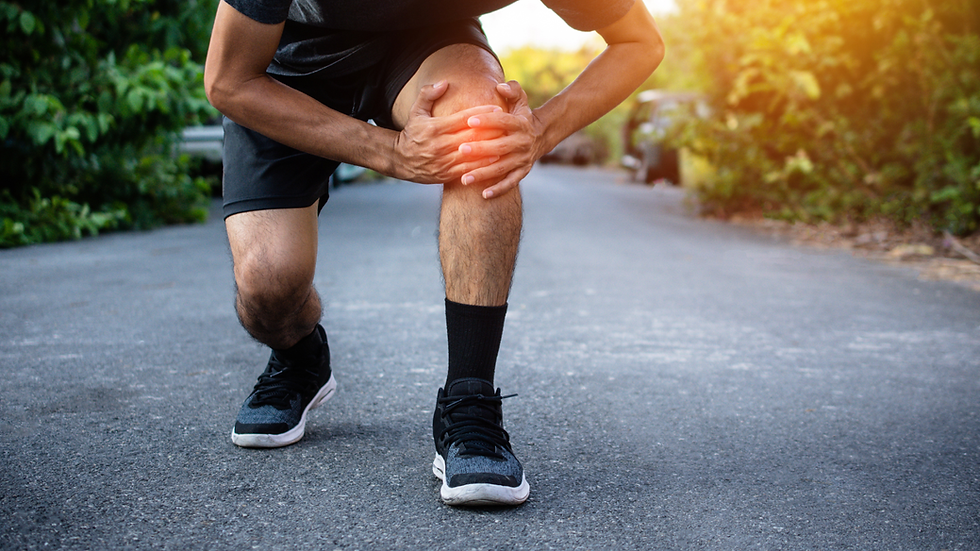
Knee pain is one of the most common reasons runners stop training. You feel fine for the first kilometre, then that familiar ache shows up, on the outside of your knee, below the kneecap, or deep inside the joint. Sometimes it fades. Sometimes it gets worse. The problem is that not all knee pain is the same, and treating the wrong cause the wrong way can turn a minor issue into a more serious one. This guide explains what is actually happening in your knee, why it happens specifically in runners, and which option is best: sports physiotherapy vs regular physiotherapy.
Why Do Runners Get Knee Pain So Often?
Running puts roughly 2.5 to 3 times your body weight through each knee with every stride. At an easy pace of 5 km/h, most people take around 8,000 to 10,000 steps per hour. That adds up fast. The knee is not a simple hinge; it is a complex joint that depends on your hip, ankle, and foot all working together. When one piece is off, the knee absorbs the extra load.
The most common reasons runners develop knee pain when running include:
Increasing mileage too fast — adding more than 10% per week is considered a risk factor for overuse injury
Weak hip and glute muscles — these control how your knee tracks during each stride
Worn footwear — running shoes lose cushioning and support after 500–800 km, well before the upper shows visible wear
Running on hard surfaces — concrete transmits more force than asphalt or trails
Overpronation or supination — the way your foot rolls inward or outward affects how load moves through your knee
None of these is a permanent problem. Most of them have clear solutions, but you need to know which one applies to you.
What Are the Most Common Causes of Knee Pain When Running?

Let’s take a look:
Runner's knee (patellofemoral pain syndrome) is the most common diagnosis in recreational runners. Pain tends to sit around or behind the kneecap. It often feels worse going downstairs or after sitting for a long time. Weak quads and tight hip flexors are usually involved.
IT band syndrome causes pain on the outer side of the knee. The iliotibial band, a thick strip of connective tissue running from your hip to just below your knee, becomes irritated where it crosses the joint. It is particularly common in people who run long distances or who have suddenly increased their weekly kilometres.
Patellar tendinitis produces pain just below the kneecap, where the patellar tendon attaches. It is more common in runners who do a lot of hill work or plyometric training. The tendon is being asked to absorb more load than it has built up the capacity to handle.
Meniscus irritation typically shows up as pain on the inner or outer edge of the knee, sometimes with a sense of the joint clicking or catching. The menisci are two pieces of cartilage that act as cushions inside the joint. Acute tears usually happen from a twisting movement, but gradual irritation from repetitive loading is also possible in runners.
Biomechanical issues cover a broader category, including gait problems, foot alignment, leg length differences, or muscle imbalances that create uneven loading across the joint. These often need an assessment to be properly identified.
How to Fix Knee Pain When Running
The right fix depends entirely on which structure is involved. That said, there are steps that apply to almost every type of knee pain when running and can help reduce the risk of further sports-related injury.
Step 1: Reduce load immediately. This does not mean stopping all activity. It means cutting your mileage by 30–50% and avoiding any run that reproduces pain above a 4 out of 10. Continuing to run through moderate or sharp pain tends to prolong recovery.
Step 2: Address the hip and glute strength gap. Hip abductor weakness is consistently associated with patellofemoral pain in runners. Exercises like clamshells, side-lying hip abduction, and single-leg deadlifts target this directly.
Step 3: Check your footwear. Bring your running shoes to a proper gait assessment. A shoe that worked well at 200 km may no longer support your foot the way it did. In some cases, custom orthotics, especially ones designed for runners, can significantly reduce loading asymmetry.
Step 4: Modify your running form. Increasing your cadence (steps per minute) by 5–10% has been shown to reduce peak knee load in runners with patellofemoral pain. A cadence of 170–180 steps per minute is commonly targeted in physiotherapy-led gait retraining.
Step 5: Get an assessment if pain persists. If your knee is still painful after 2–3 weeks of modified training, swelling is present, or the knee clicks or gives way, a physiotherapy assessment is the right next step. A physiotherapist can identify which structure is involved, rule out anything more serious, and build a structured return-to-run programme specific to you.
When Should You See a Sports Physiotherapist?

A good rule of thumb: if pain is still present at rest after 48 hours, or if it returns immediately every time you try running again, it is worth getting it assessed. A physiotherapist at a sports physiotherapy clinic in Waterloo can distinguish between soft tissue irritation and a structural problem like a meniscus tear, and advise whether imaging is needed.
At Modern Healing's clinic in Waterloo, our physiotherapists work alongside chiropractors and naturopathic doctors in the same space. That means if your knee pain is connected to something upstream, like hip tightness, a gait issue, or a nutritional factor affecting recovery, we can address it without sending you to three different clinics.
Can You Prevent Knee Pain From Coming Back?
Yes, in most cases. The runners who stay injury-free are not the ones who train less; they are the ones who train smarter. A few practices that research consistently supports, which might help people wondering "how to prevent sports injuries”.
Running on softer surfaces at least 2 days per week
Including 1–2 strength sessions per week focused on hip, glute, and single-leg stability
Building weekly mileage gradually rather than in sudden jumps
Replace running shoes every 500–800 km
Getting a gait analysis done at an orthopedic clinic in Waterloo, if you have recurring knee issues
Consistency in these habits makes a bigger difference than any single treatment.
Frequently Asked Questions
Should I stop running completely if my knee hurts?
Mild pain that fades within 24 hours allows for reduced mileage and intensity, but sharp or persistent pain requires stopping and consulting a physiotherapist.
How long does runner's knee take to heal?
Mild cases may heal in 4–6 weeks with strengthening, while more persistent cases can take 3–4 months, especially if hip weakness is not addressed.
Is it bad to run through knee pain?
Running through pain above a 4/10 or altering your stride can increase the risk of compensatory injuries, so reducing training is preferred.
Can knee pain when running be a sign of something serious?
Most knee pain is from soft tissue overload, but significant swelling, locking, or pain after trauma should be assessed by a physiotherapist, potentially with imaging like an MRI.
Conclusion
Knee pain in runners is common, with causes ranging from runner's knee to IT band syndrome. The key to recovery lies in identifying the root cause and addressing it with proper rest, strength training, and footwear adjustments. Seeking professional help ensures effective treatment and long-term prevention of recurrence.
Get a Professional Assessment and Start Your Road to Recovery Today
If knee pain is holding you back from running, don't wait for it to get worse. Our expert physiotherapists at Modern Healing specialize in diagnosing and treating running-related knee pain. Book a comprehensive assessment today, and let us help you get back to your training safely and effectively.


Comments